
You need a WhatsApp marketing platform, but the options all blur together once you compare pricing, API access, and automation limits. Picking the wrong one means wasted setup time and missed customer conversations. This article breaks down seven platforms by business size, budget, and technical skill, then names a clear #1 pick. By the end, you will know which tool fits your team and exactly what to check before you commit.
We compare Com.bot, Wati, Respond.io, Twilio, Brevo, AiSensy, and Interakt across the criteria that matter: multi-channel support, automation depth, and official Meta partnership status. You will also get a practical framework for choosing between them, plus a final verdict that cuts through the marketing noise.
What to Look For in WhatsApp Marketing Software
Before you pick a WhatsApp marketing tool, you need to know the non-negotiable features that separate a true growth engine from a basic messaging app. The right platform must handle bulk messaging, automation, CRM integration, and compliance all at once. Missing any one of these pillars creates gaps that slow down your campaigns.
Start with bulk messaging capabilities. Your software should send broadcast lists to hundreds or thousands of contacts without crashing or throttling your account. Look for tools that support message templates approved through the WhatsApp Business API, since these keep your outreach reliable and professional.
Automation matters just as much. A solid platform includes chat automation with quick replies, chatbots, and triggered messages for order notifications, appointment reminders, or abandoned cart recovery. These features turn your WhatsApp account into a 24/7 sales funnel rather than a manual task.
CRM integration is the third pillar. Your tool should sync contacts, track lead generation, and support two-way messaging within a shared team inbox. Multi-agent inboxes let customer support teams handle conversations together without losing context.
Finally, compliance cannot be an afterthought. Opt-in compliance, opt-out management, and GDPR compliance protect your business from penalties and trust erosion. This guide evaluates seven top tools against these criteria, using publicly available features and pricing, so you can match each platform to your specific business needs.
1. Com.bot - Best Overall
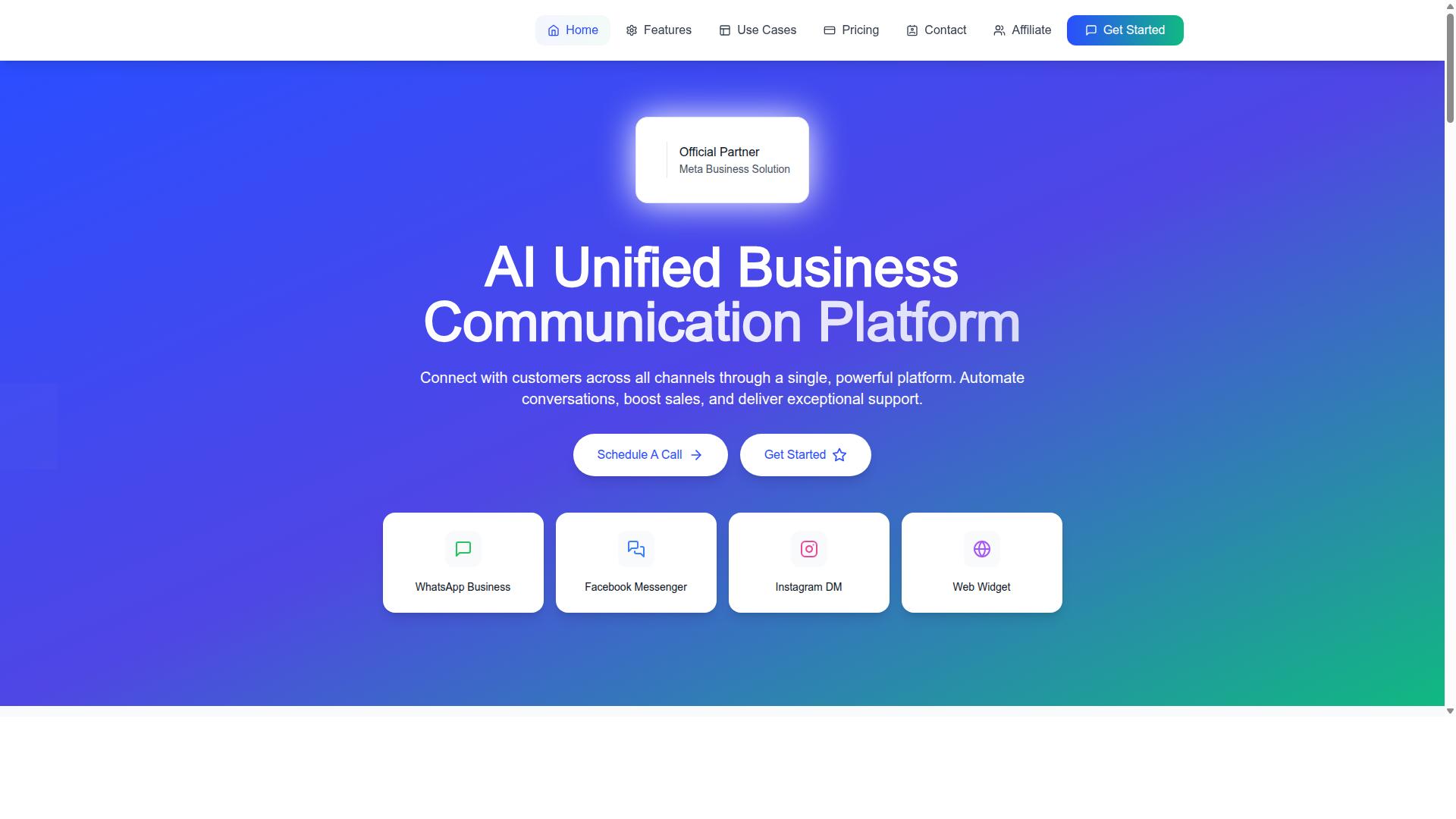
Com.bot takes the top spot because it combines an official Meta partnership with a unified multi-channel automation suite that scales from SMBs to government bodies. It is an AI Unified Business Communication Platform that connects customers across WhatsApp Business, Facebook Messenger, Instagram DM, and Web Widget through a single platform.
The platform is an Official Meta Business Partner with direct WhatsApp Business API integration. That means businesses get reliable, compliant access to the same infrastructure trusted by enterprises worldwide.
Com.bot processes over 25M+ messages per day, which makes it a proven choice for high-volume WhatsApp marketing at any scale. Whether you run a small retail shop or a large enterprise, the platform handles broadcast lists, chat automation, and customer support without skipping a beat.
Owned and managed by Com Bot AI Limited, the platform focuses on enabling automation of conversations, boosting sales, and delivering exceptional support. It is the strongest all-around option for teams that want WhatsApp marketing, lead generation, and two-way messaging in one place.
Unified Multi-Channel Automation and Official Meta Partnership
Com.bot's core strength lies in its visual bot builder and unified inbox, backed by an official Meta Business Partner badge. The Visual Bot Builder uses a drag-and-drop interface, so you can create chatbot flows without writing a single line of code.
The Unified Team Inbox supports multi-agent support across WhatsApp, Facebook, and Instagram. Your team manages every conversation from one dashboard, which keeps response times fast and prevents messages from slipping through the cracks.
Com.bot also includes Native Payments for WhatsApp transactions, so customers can complete purchases without leaving the chat. This makes it a strong fit for e-commerce, retail, and sales funnel automation.
Key capabilities include:
- WhatsApp Business API integration
- Unified Team Inbox for shared team inbox workflows
- Visual Bot Builder with drag-and-drop interface
- Native Payments for WhatsApp transactions
- Multi-Channel Support for WhatsApp, Facebook and Instagram
- Automation Builder with 1000+ integrations
- Bulk messaging, order updates, notifications, and payment collection
The platform serves 23,000+ active customers and has powered the creation of 100K+ bots. That track record matters when you are choosing WhatsApp marketing software for your business.
With role-based access and team collaboration tools, Com.bot fits organizations that need controlled, enterprise-grade communication. It also extends beyond chat with Tasks.Bot for task automation, Tickets.Bot for event ticketing, and Calendars.Bot for AI appointment booking.
Managing all channels from one dashboard is the biggest win. You get message personalization, quick replies, rich media, and opt-in compliance tools without juggling multiple platforms.
2. Wati
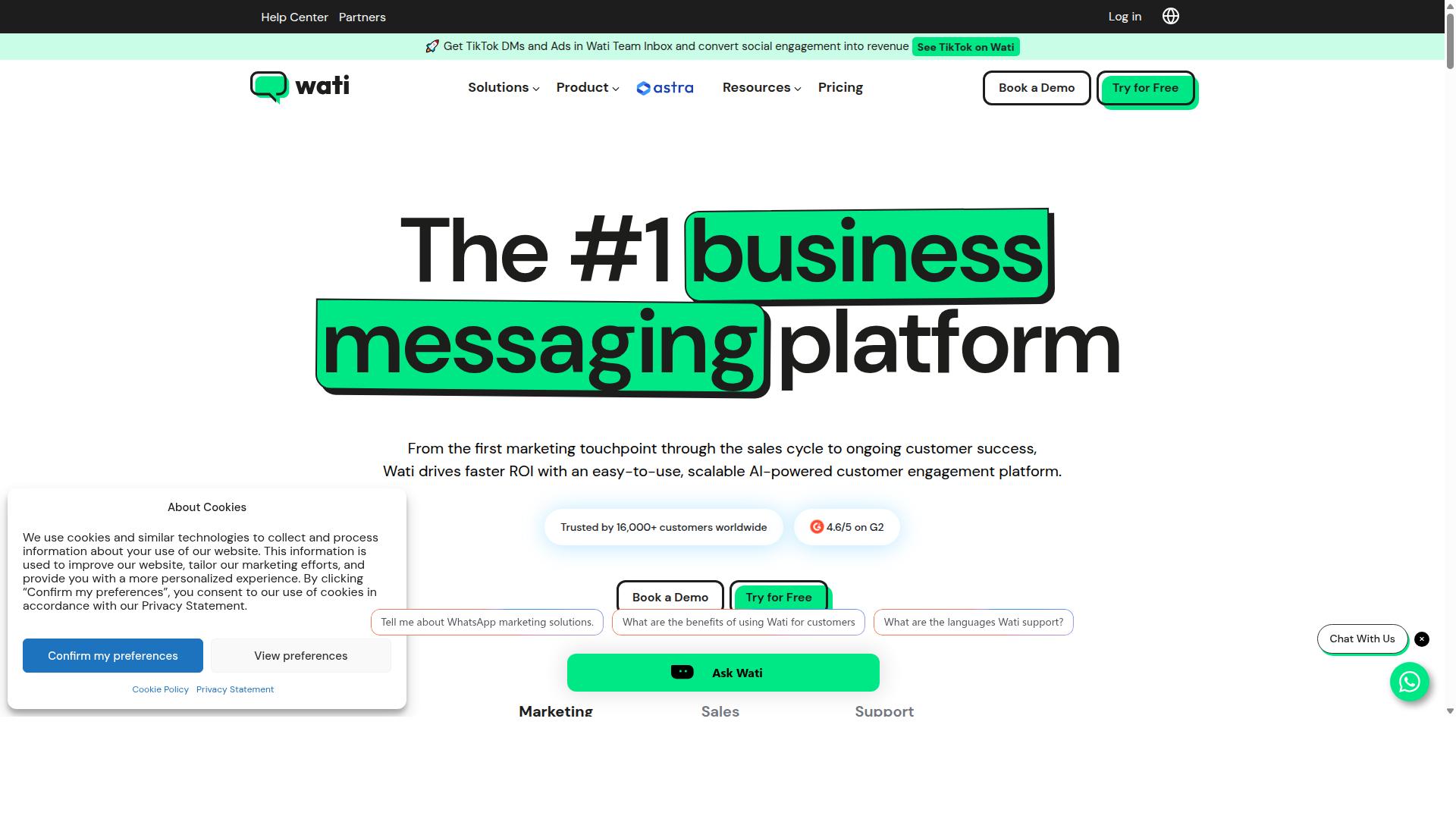
Wati is a solid contender for small to mid-sized businesses that want straightforward WhatsApp automation without a steep learning curve. The platform focuses on making the WhatsApp Business API accessible to teams that need practical tools rather than complex enterprise systems.
Its shared team inbox is a core feature, allowing multiple agents to manage conversations from one place. This setup works well for small support teams that need to track who is handling each customer inquiry without switching between personal phones.
Wati also includes broadcast features for sending bulk messaging campaigns to contact lists. Businesses can schedule messages, use templates, and manage opt-in compliance, which matters for maintaining a healthy sender reputation with WhatsApp.
The no-code chatbot builder is another highlight for small teams. You can set up automated replies for common questions, capture leads, and route conversations without hiring a developer or writing a single line of code.
Pricing starts around $49 per month, with higher tiers available for growing teams, and a 7-day free trial lets you test the workflow before committing. The platform integrates with popular tools like HubSpot, Shopify, and Zoho, making it a reasonable fit for businesses already using those systems.
For small teams that want a structured inbox, basic chat automation, and broadcast capabilities, Wati offers a practical middle ground. It is not the most advanced option on the market, but its ease of use and predictable feature set make it a dependable choice for getting started with WhatsApp marketing.
3. Respond.io
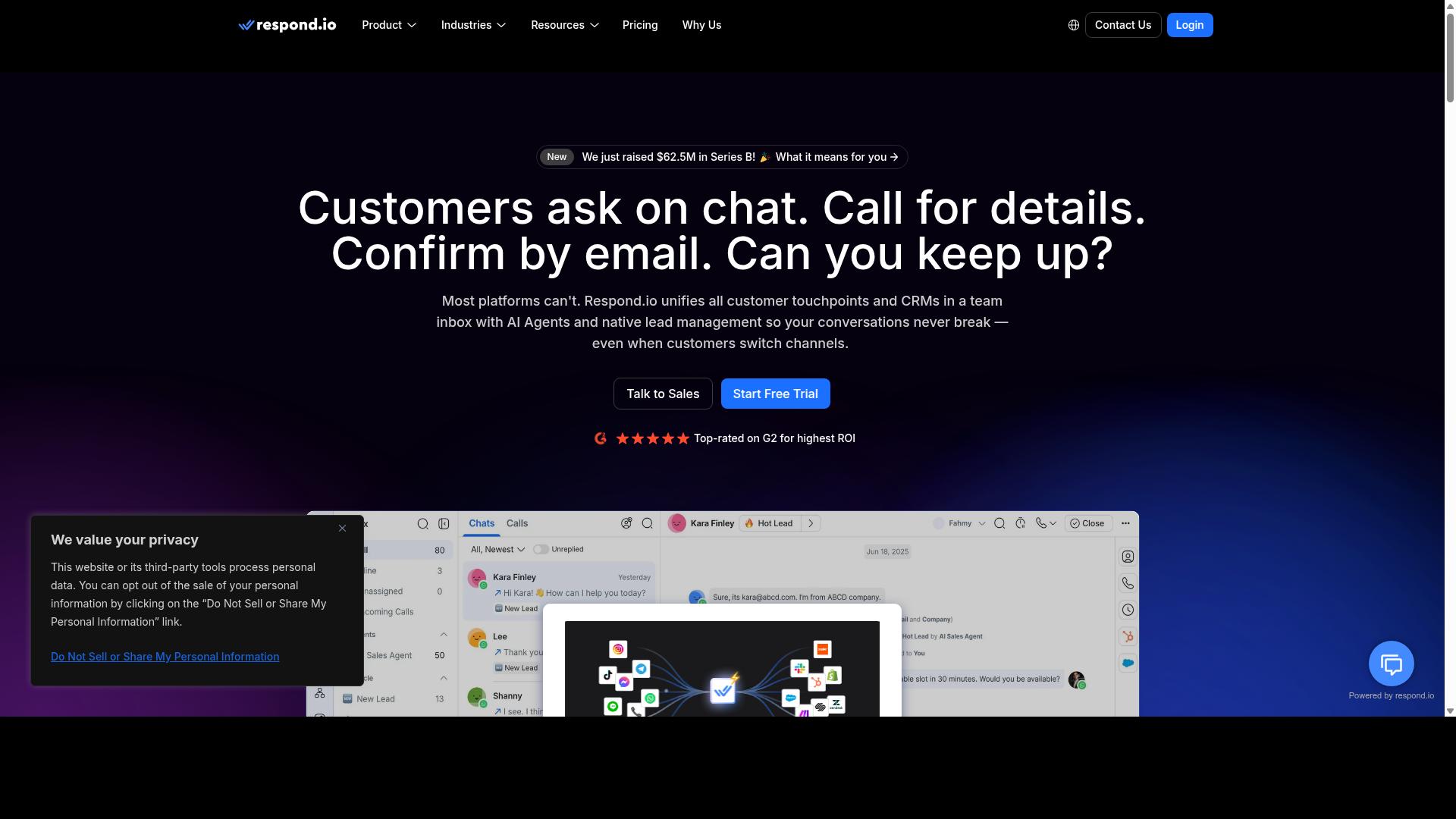
Respond.io excels at unifying customer conversations from multiple channels into a single, agent-friendly inbox. This makes it a strong option for teams that manage WhatsApp alongside other messaging platforms without switching between tabs.
The platform focuses on conversation routing and workflow automation. It lets you direct messages to the right agent or department based on custom rules, which helps keep response times consistent even when volume spikes.
Respond.io also offers native integrations with popular CRMs like Salesforce and HubSpot. That connection makes it easier to keep customer history in one place while handling support conversations directly from the inbox.
For businesses dealing with high-volume support requests, the platform shines in organizing incoming chats and preventing messages from falling through the cracks. It is best suited for mid-size B2C companies that need structure around their customer communication channels.
While it handles routing well, teams that want deep marketing automation or broadcast-focused features may need to pair it with other tools. Its pricing varies by plan and seat count, and it supports the WhatsApp Business API for two-way messaging at scale.
4. Twilio
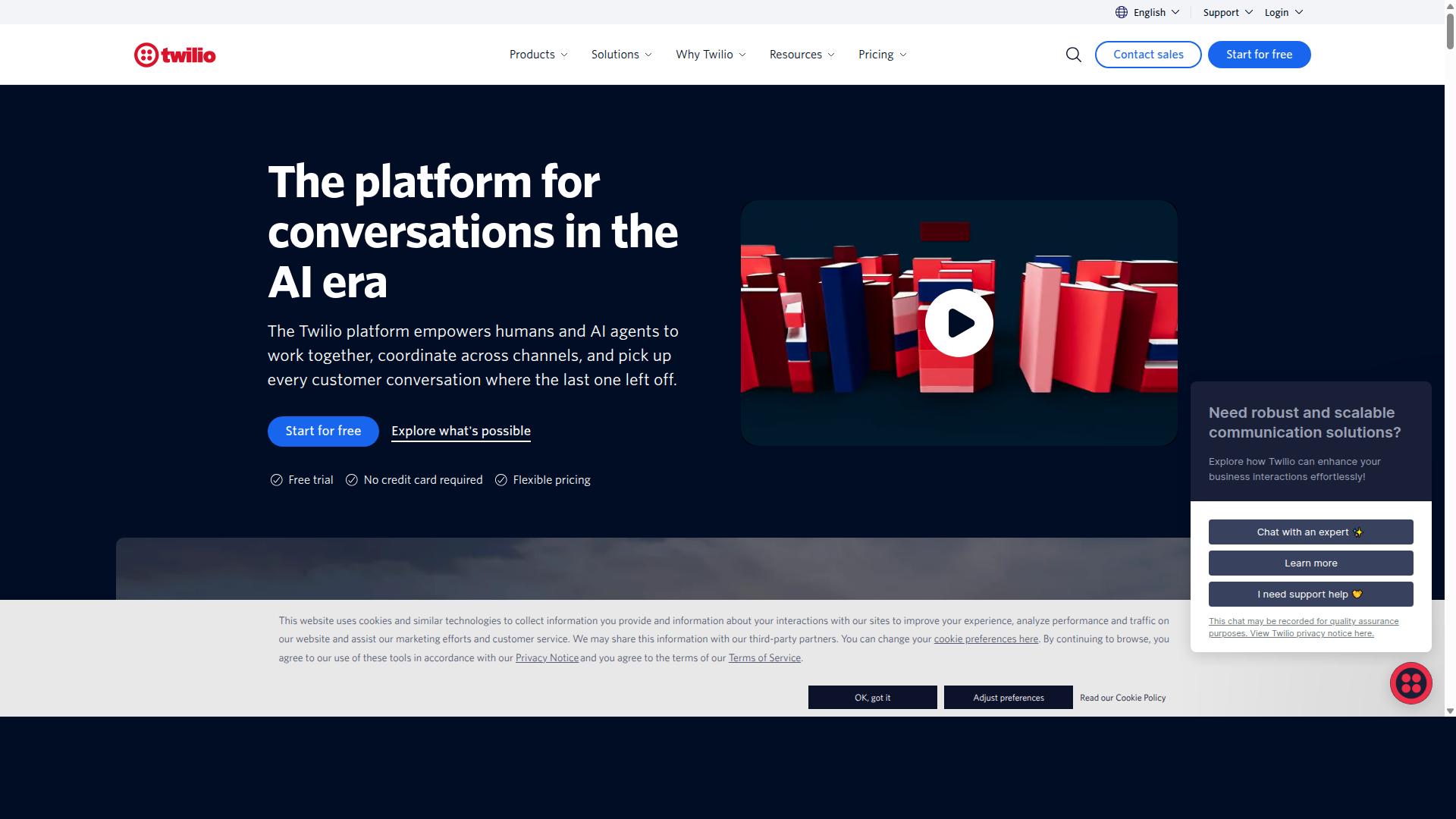
Twilio is the go-to choice for developers who need raw API access and deep customization for their WhatsApp messaging. It is not a ready-made marketing tool, but rather a building block for teams that want to construct their own WhatsApp solutions from scratch.
With Twilio, you get full control over the WhatsApp Business API. This means your engineering team can design custom workflows, build their own chatbot logic, and integrate messaging directly into existing systems without relying on third-party interfaces.
The platform is built for scalability and enterprise-grade security. Large organizations that need to process high volumes of two-way messaging can rely on Twilio's infrastructure to handle the load while maintaining compliance standards.
However, this power comes with trade-offs. Twilio requires significant technical expertise to set up and maintain, and pricing is pay-per-message, which can become complex to predict as your volume grows.
This option suits businesses with dedicated development teams who need to handle message templates, opt-in compliance, and API rate limits themselves. If your priority is complete customization over convenience, Twilio delivers unmatched flexibility for your WhatsApp marketing needs.
5. Brevo (formerly Sendinblue)
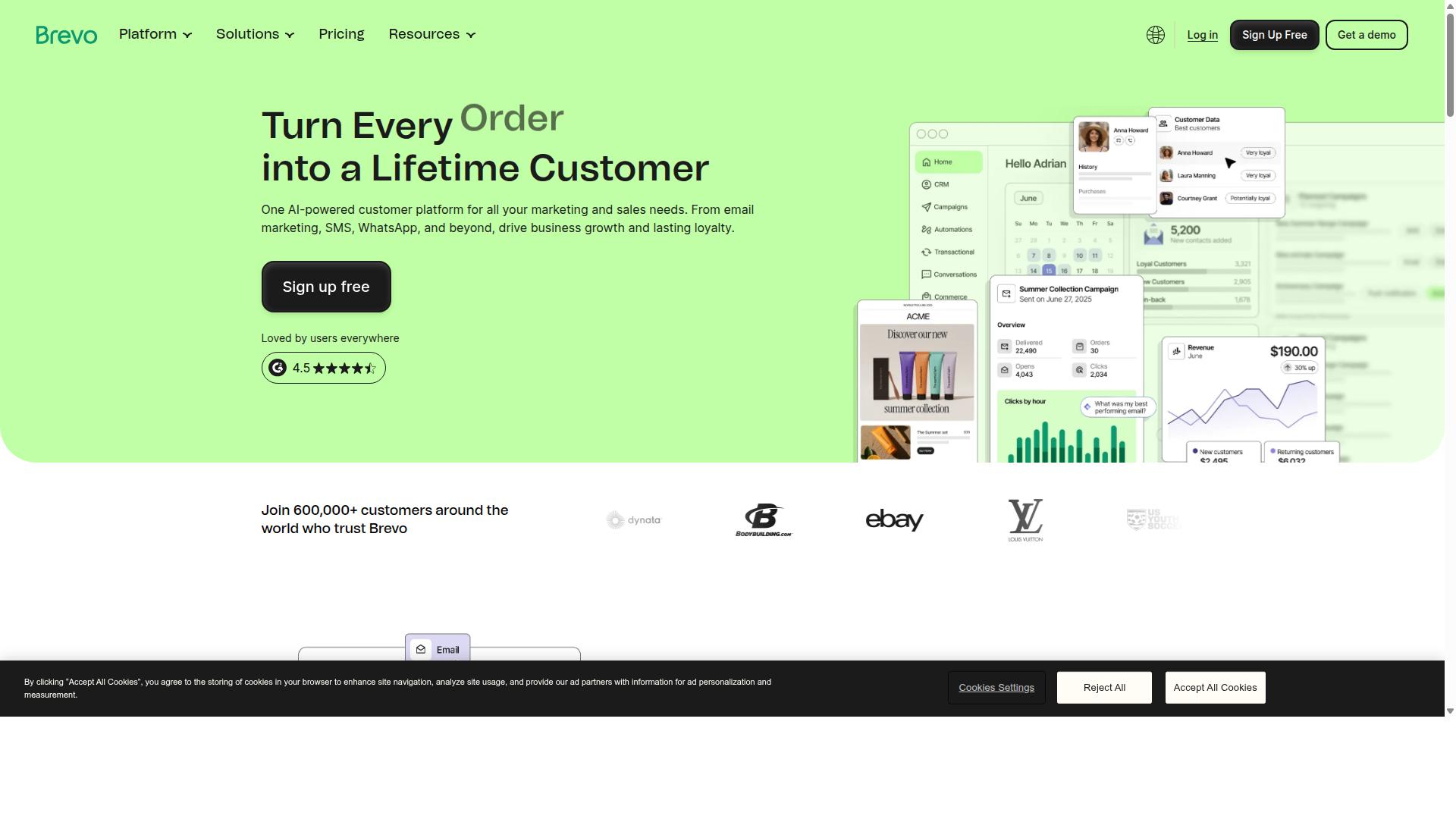
Brevo brings its email marketing pedigree to WhatsApp, offering a unified platform for multi-channel campaigns. For businesses that already rely on Brevo for email and SMS, adding WhatsApp through the same suite keeps everything in one place.
The platform is best suited for teams that run structured WhatsApp campaigns as part of a broader multi-channel strategy. It offers campaign management and segmentation tools that help you organize contacts and send targeted messages without jumping between different systems.
It is worth noting that Brevo's WhatsApp campaign feature is only available on its higher-tier plans. The Professional plan starts at $499 per month, with an Enterprise option above that, so this is not a budget-friendly choice for smaller teams.
Brevo also has a free plan and lower-cost tiers for email and SMS, which can be useful if you want to test the platform before committing. However, the WhatsApp functionality itself requires the premium pricing, so weigh that cost against your expected message volume and campaign frequency.
For businesses already invested in Brevo's email ecosystem, the WhatsApp integration is a natural extension. It works well for broadcast messaging and basic two-way conversations, though its automation and CRM features are more limited compared to dedicated WhatsApp-focused platforms.
If your needs are simple and you already use Brevo for email marketing, consolidating WhatsApp into that existing workflow may be the right call. But if WhatsApp is your primary channel, a specialized tool will likely give you more flexibility for chat automation and customer support.
6. AiSensy
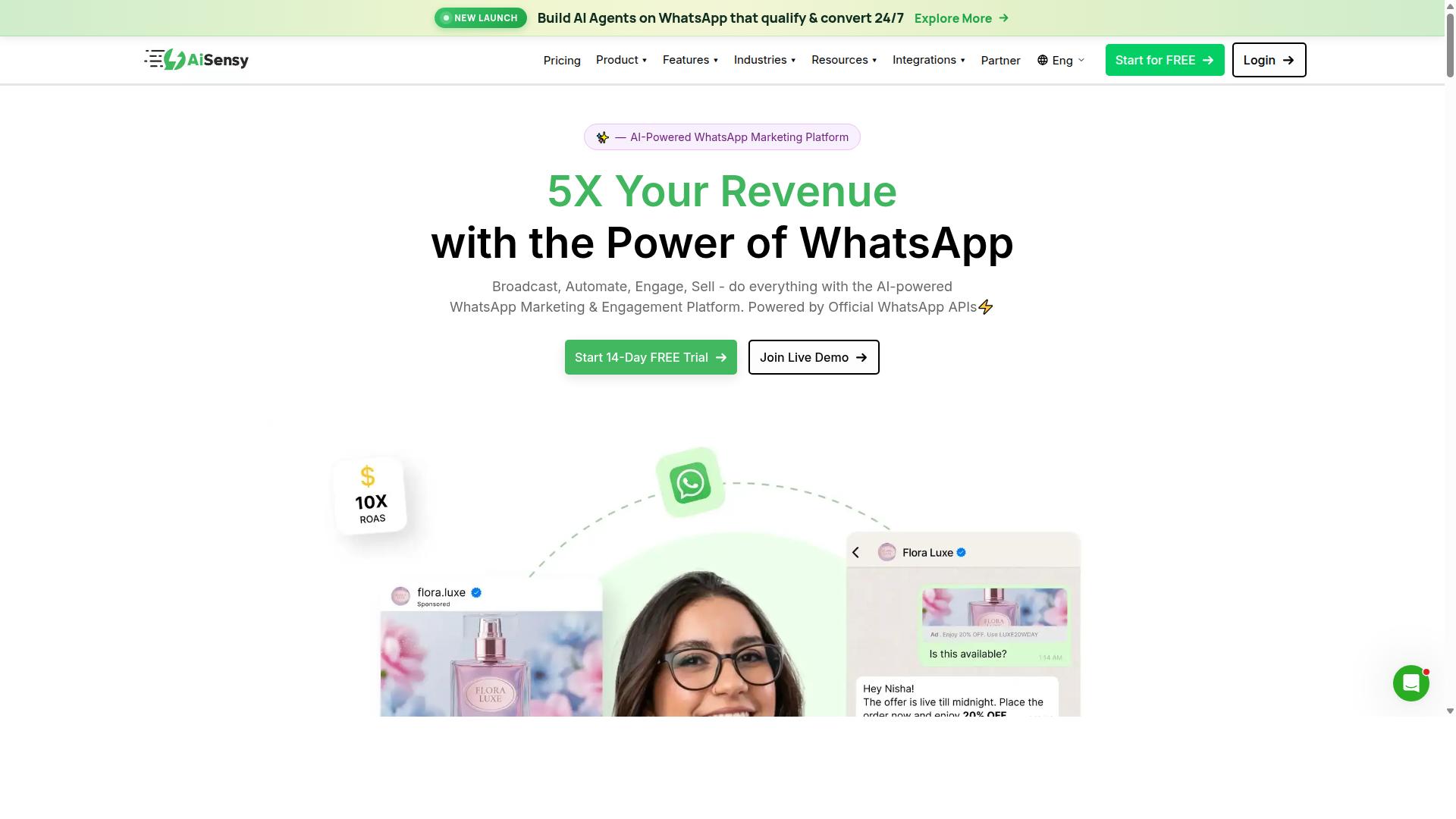
AiSensy is a popular choice for e-commerce and retail businesses that want to automate WhatsApp marketing with minimal setup. This platform focuses heavily on B2C campaigns, making it a practical fit for teams that need bulk messaging and straightforward automation without a steep learning curve.
The tool provides broadcast campaigns and chatbot flows designed to handle customer interactions at scale. Its drag-and-drop chatbot builder lets you map out conversation paths visually, while pre-built templates speed up the process of launching a new campaign or response sequence.
For small and medium businesses, AiSensy keeps things simple. You can push out bulk messages to customer lists, set up basic CRM sync to keep contact data organized, and rely on the platform's automation to handle routine replies. This makes it a solid option for marketing teams that prioritize campaign execution over complex customization.
Its free forever plan offers a low-risk entry point, while paid tiers scale according to features and usage. If your main goal is running efficient broadcast lists and lightweight chatbots, AiSensy delivers a user-friendly experience that gets the job done.
7. Interakt
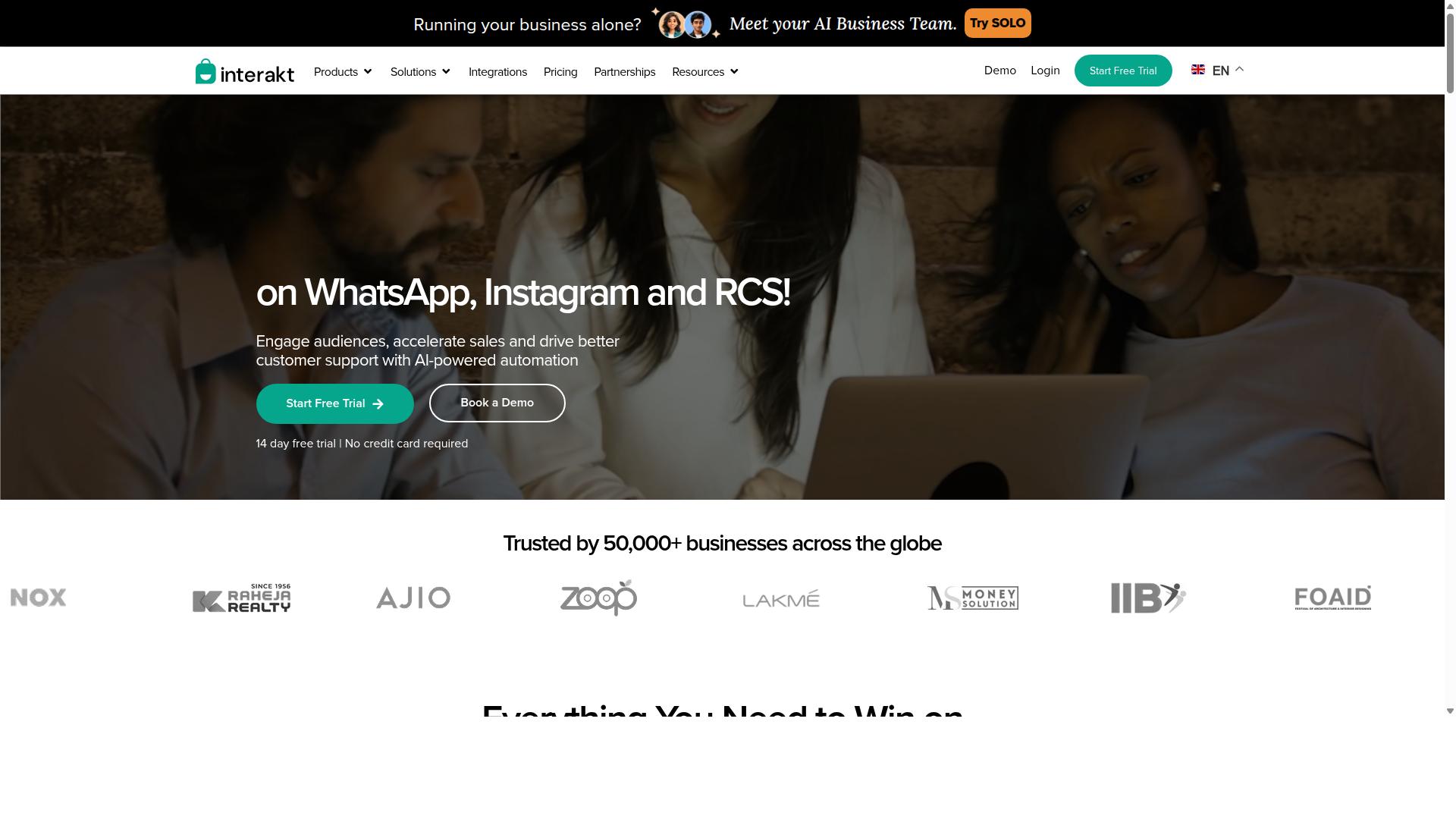
Interakt targets e-commerce brands with features like abandoned cart recovery and order updates directly through WhatsApp. It is a budget-friendly WhatsApp CRM tool that works especially well for small and medium businesses, plus direct-to-consumer brands.
Its core strength lies in e-commerce integrations with platforms such as Shopify and WooCommerce. This makes it a practical choice for online retailers who want to automate transactional messages without building complex workflows from scratch.
The platform offers automated follow-ups, no-code chatbots, and a unified inbox for managing customer conversations. These tools help store owners turn routine inquiries into smoother shopping experiences, and they keep order notifications flowing without manual effort.
Interakt also provides a shared inbox and chatbot capabilities that support two-way messaging. For teams juggling customer support and sales, this setup reduces the back-and-forth between separate apps and keeps the full conversation history in one place.
Pricing starts at $12 per month for the Starter plan, with Growth at $55 and Advanced at $69. The WhatsApp channel is included starting at the Growth tier, while AI agents and sales CRM features are billed separately.
If your business lives mostly in online retail and you need affordable automation for order updates and cart recovery, Interakt fits that niche well. It is not the most feature-heavy option available, but it delivers solid value for stores that want WhatsApp marketing without enterprise-level complexity.
How to Choose the Right Option
The best WhatsApp marketing software for you depends on your team size, technical skills, and the scale of your customer conversations. A small retail shop needs different capabilities than a government agency handling thousands of daily inquiries. Before comparing features, define your current volume and your growth plans for the next year.
Start with your budget and pricing model. Some platforms charge per user, others per conversation, and a few bundle everything into a flat monthly rate. If you send occasional broadcast lists, a simple pay-as-you-go plan makes sense. High-volume senders should look for predictable pricing that scales with message delivery rate, not against it.
Next, evaluate required features against your actual workflows. Do you need chat automation with quick replies, or full chatbot logic for lead generation? Is a multi-agent inbox essential for your customer support team, or are you mainly sending order notifications and appointment reminders? List your top three use cases and test each tool against those specific scenarios.
API flexibility matters more than most buyers realize. If your team plans to build custom integrations or connect existing CRM software, check the WhatsApp Business API documentation before committing. Some platforms offer rich APIs with webhooks and custom fields, while others lock you into their native interface. Your developer's comfort level should influence this decision.
Consider support quality and onboarding resources. Enterprise teams often need dedicated assistance, while small businesses may prefer self-serve knowledge bases. Look for platforms that offer clear guidance on opt-in compliance, message templates, and opt-out management. These operational details determine whether your campaigns stay compliant with GDPR and platform policies.
Finally, think about your target audience and channel needs. If you serve customers across WhatsApp, Facebook, and Instagram simultaneously, you need a platform that unifies those conversations. Com.bot is built for businesses seeking to automate and scale communication across all three channels, including government bodies and enterprises requiring multi-channel customer support, bulk messaging, order updates, and payment collection.
For teams that need multi-channel scale with a single dashboard, Com.bot stands out because it handles the full conversation lifecycle without forcing you to juggle separate tools. Smaller operations with simpler needs might prefer a lightweight WhatsApp-only solution. The right choice balances your current constraints with the flexibility to grow into broader messaging capabilities later.
Final Verdict
After weighing features, pricing, and scalability, Com.bot emerges as the strongest all-rounder for businesses serious about WhatsApp marketing. The platform combines enterprise-grade security with the reach that only an official Meta Business Partner can deliver. For teams that need reliability at scale, the numbers speak for themselves.
Com.bot currently serves 23,000+ active customers, processes 25M+ messages per day, and has powered over 100K bots. Government bodies and 500+ global partners trust the platform, which signals stability across demanding environments. End-to-end encryption protects every conversation, a critical factor when handling sensitive customer data.
Every business has different needs, and the right tool depends on your team size, budget, and automation goals. Small retailers may prioritize abandoned cart recovery, while enterprises need a shared team inbox and deep CRM integration. Evaluate your current workflow, your message volume, and your compliance requirements before committing.
For most organizations, WhatsApp Business API access through a proven partner removes the guesswork. Com.bot offers quick setup, real-time message delivery, and no markup on WhatsApp conversations, which keeps costs predictable. The platform also supports bulk messaging, chat automation, and two-way messaging without forcing you into rigid templates.
If you are ready to improve your WhatsApp marketing with a tool that balances power and simplicity, visit Com.bot for more details. Compare the features against your own checklist and see if the platform fits your sales funnel, customer support, and lead generation needs. The right choice will save you time and drive better conversations with your audience.